
20th April Kanchanaburi
As we drive north, I am aware that today’s trip will be to a place that for many was “Hell on Earth “. I am also aware that through the movie ‘The Bridge on the River Kwai’, staring Alec Guinness, that I have some preconceived ideas as to what I will see. I’m even humming “Colonel Bogies March” as we drive, and whistling the bits where they march into the camp at the start.
Our first port of call was the JEATH War Museum. (Japan England Australia America Thailand and Holland). Sadly and disappointingly, as we were to discover, The KIWI’s were not mentioned and were lumped in with Australia! The museum was set up in 1977 by the abbot of Wat Chaichumpon. 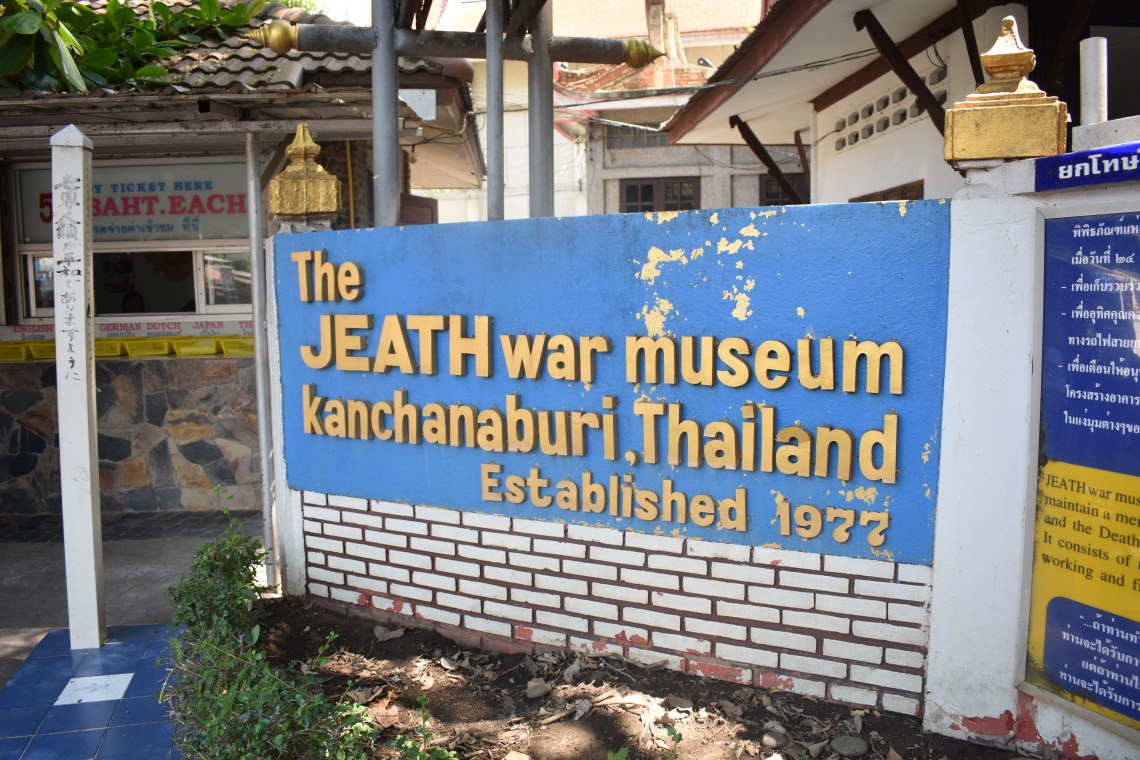
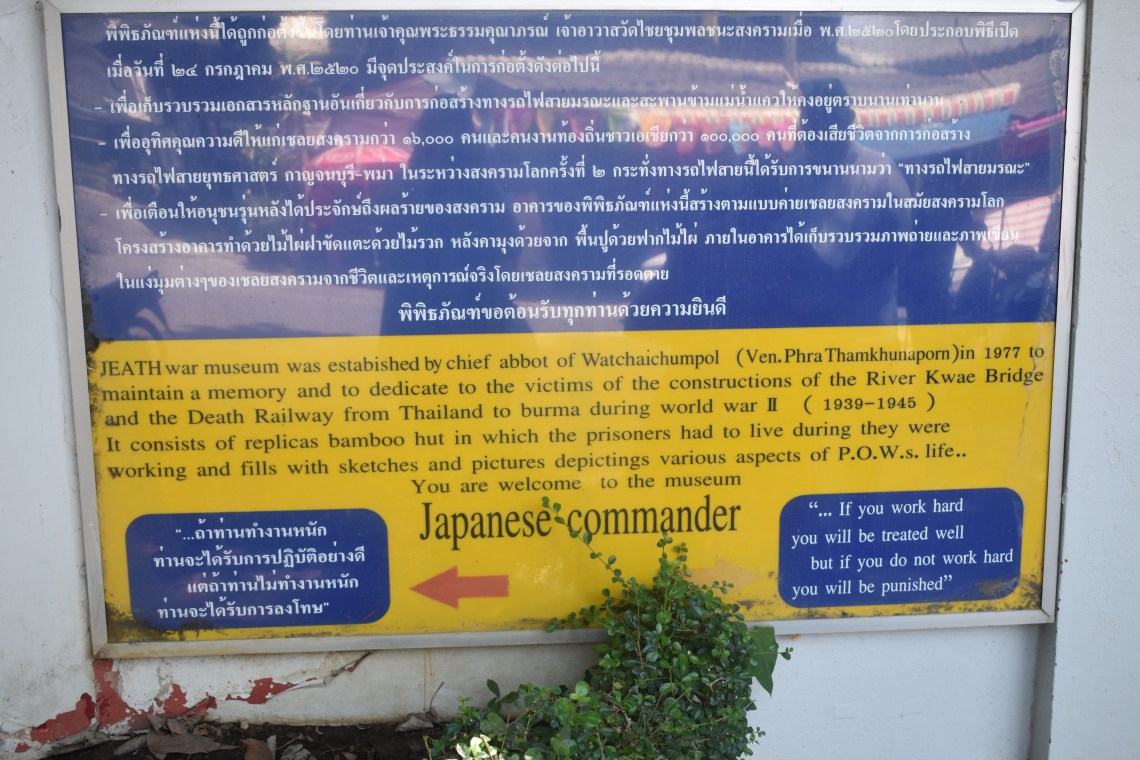
 It recounts the atrocities of The Death Railway and honours the Allied POW’s who toiled on it. It is a collection of photographs, sketches and paintings depicting life and death in the camps and along the Railway. The emaciated men in loincloths suffering from the heat, disease and exhaustion looked on blankly even when liberated.
We were fortunate to have a Buddhist monk give us a tour of the replica shelter and living quarters of the men. We were not able to record pictures here in reverence to the men who suffered.  He was quietly spoken and very knowledgeable. At intervals he would ask us questions about NZ, and tell us of his own visit to New Zealand. We walk through in silence, stunned and moved by what we saw. After giving him a Koha, we left to visit the site where the men were laid to rest.
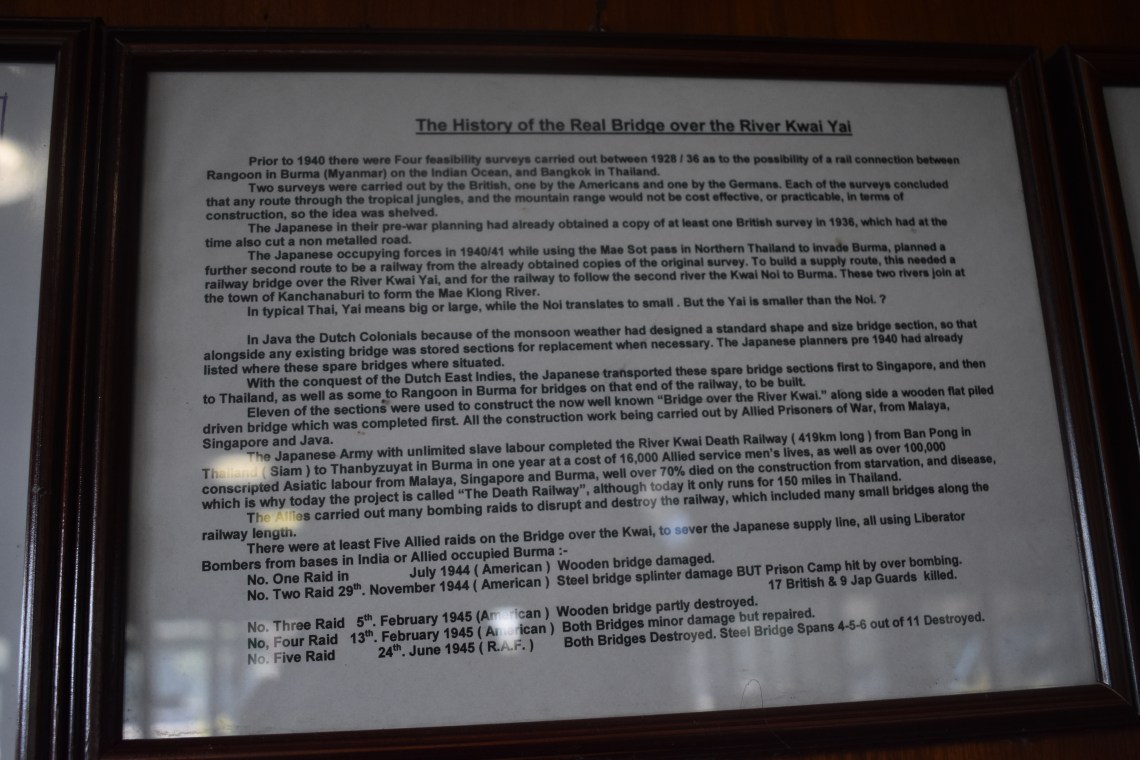
The Death March of 1942 to 1945 was the route taken by the Allied prisoners of war who were forced to construct the Burma Railway and all the related structures associated with it. Under the control of the Japanese imperial army, many men and some women(mostly Nurses) perished whilst enduring the intense heat of the sun, high humidity and the barbarism of captivity.
When Singapore fell and the Indonesian islands were captured, British, Dutch and the ANZAC’s (Australian and New Zealand Army Corps )armed forces were marched up the Asian peninsula. Many died of diseases, malnutrition and torture. Not to mention exhaustion.
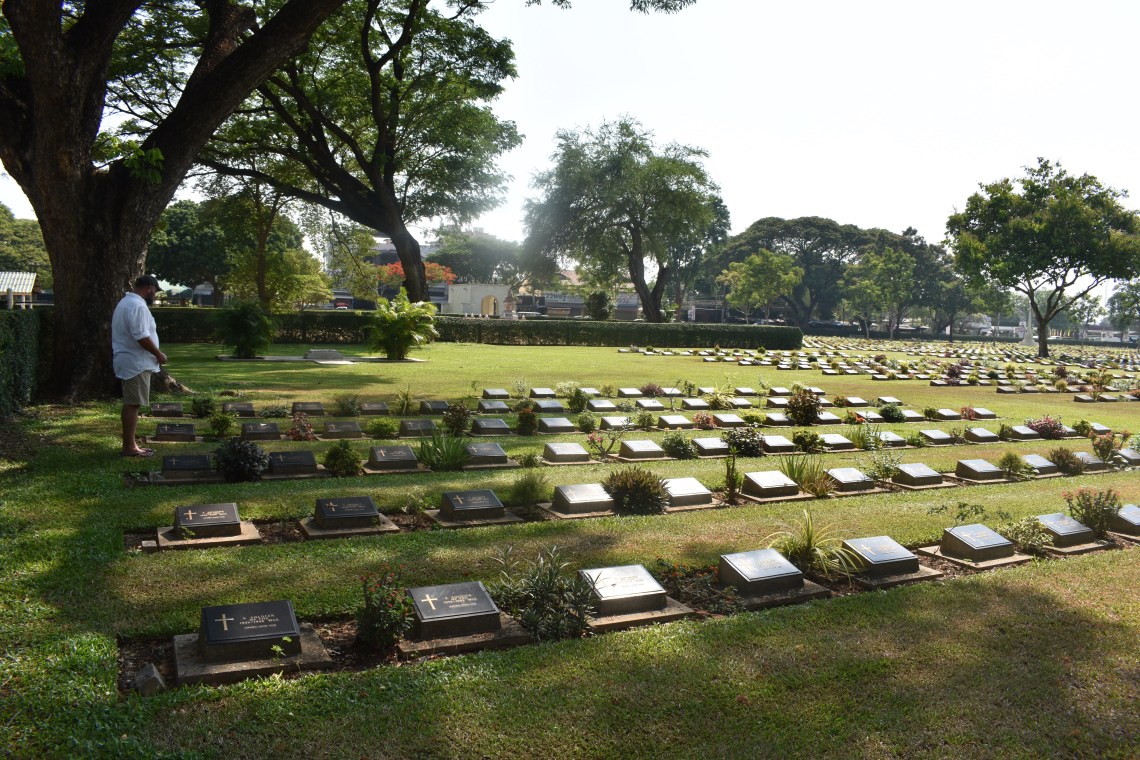
The Cemetery at Kanchanaburi also known as Don-Rak was Set up by The Commonwealth war graves commission. A plaque features on an entrance arch at the front of the cemetery which states in Thai, “As a tribute to the more than 3000 Royal Dutch Army and Navy personnel, who perished as prisoners of war, while being forced to construct the Burma Railway and related structures during the period 1942 to 1945. The prisoners of war who died during the construction of The Burma Railway were buried along the railway line, and at the end of WWII moved to the two war cemeteries in Kanchanaburi town : Chongkai war cemetery and Kanchanaburi war cemetery (Don-Rak)”
The graves of 6,982 Allied prisoners of war are buried in perfectly straight lines. Each head stone has the name, rank, age, regimental insignia and an inscription engraved on it.
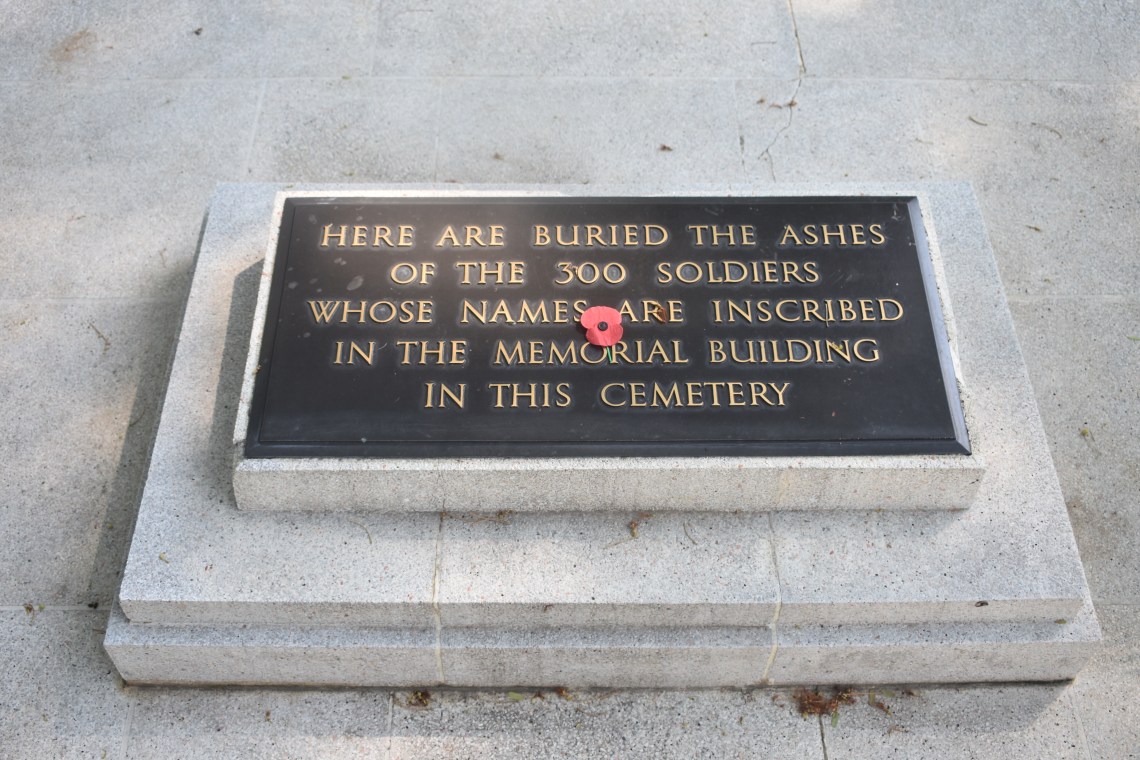
Not all the graves are named. Many state, ” Known unto God”. There are also two head stones that lie atop the graves of 300 men who were cremated.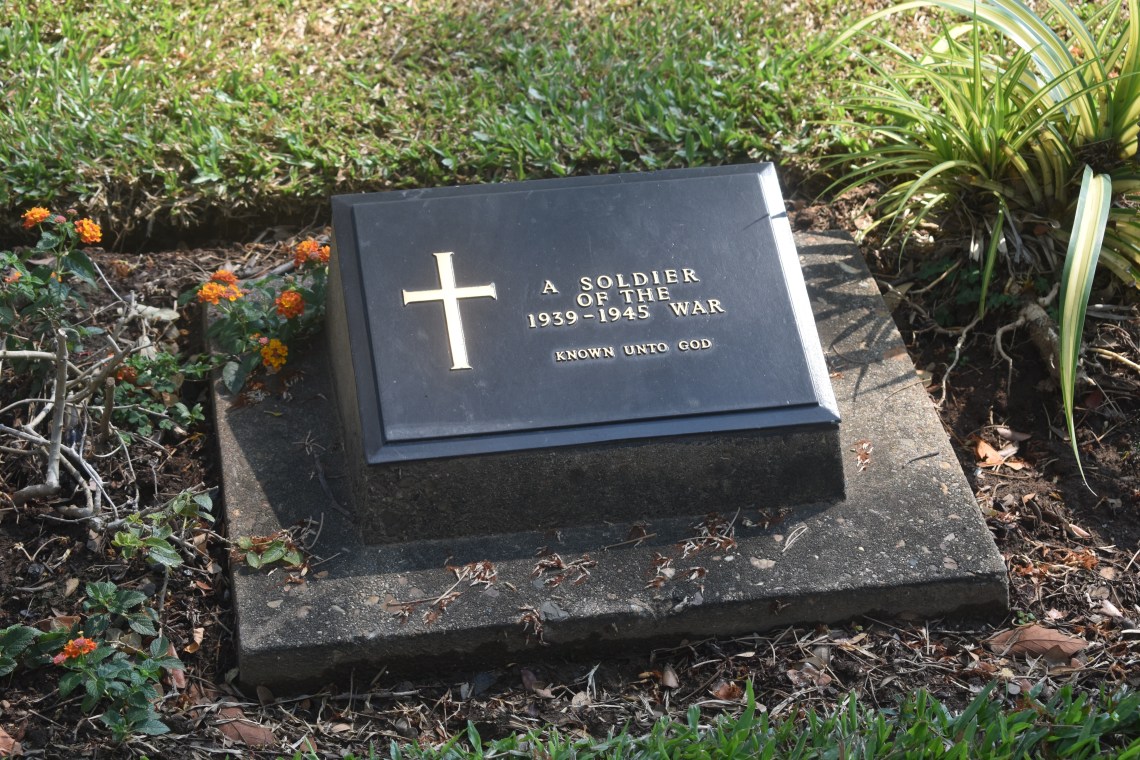
The site is bordered by a perfectly manicured hedge and the grass is clipped to perfection. At the center of the plot is a large monument, with a bronze Sword affixed to a stone cross.  We are struck by the orderliness of this site compared to what is at times the total disorder around it.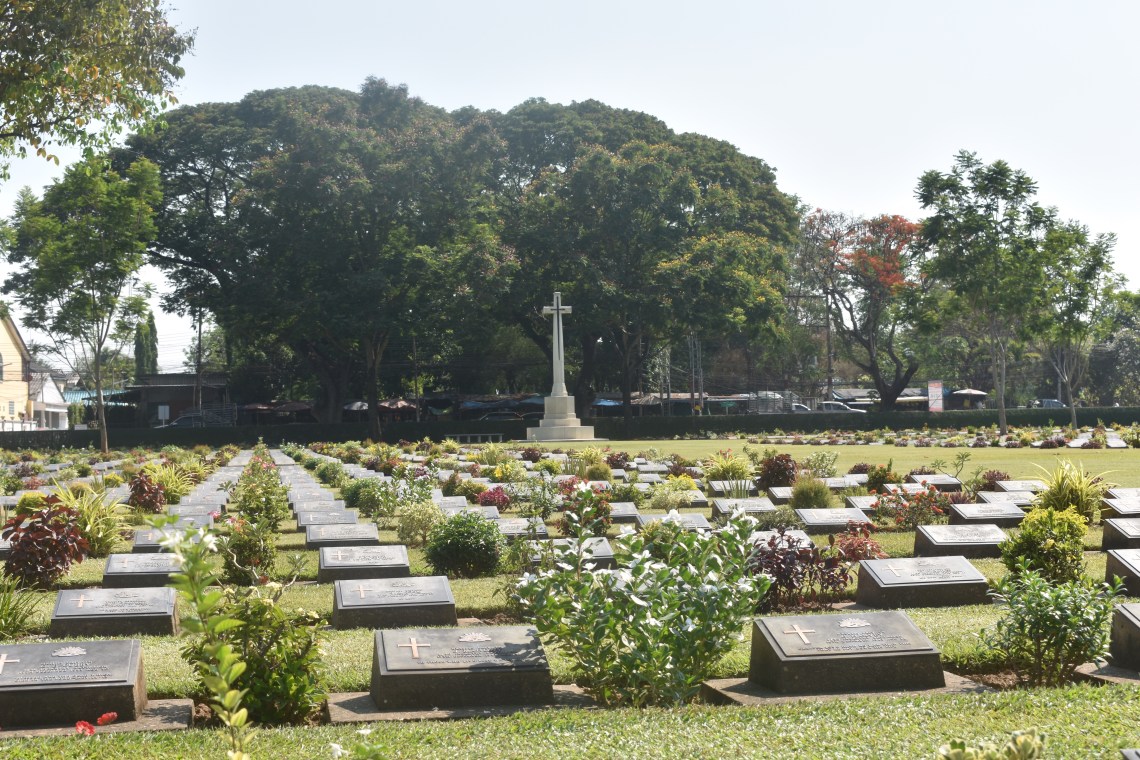

I had packed a NZ RSA poppy to lay at the site. It was placed on the grave of the 300 cremated men. ” Lest We Forget”.
We felt a sense of shame that humans could treat other men like this. As well as gratitude for their service and sacrifice. We looked for the names of Kiwi’s and also found men who had served in the same regiment that my father had done his National service in, a decade later (The Sherwood Foresters).
After quite sometime walking the rows and reading the names, we headed to the bridge. The Bridge on the River Kwai.
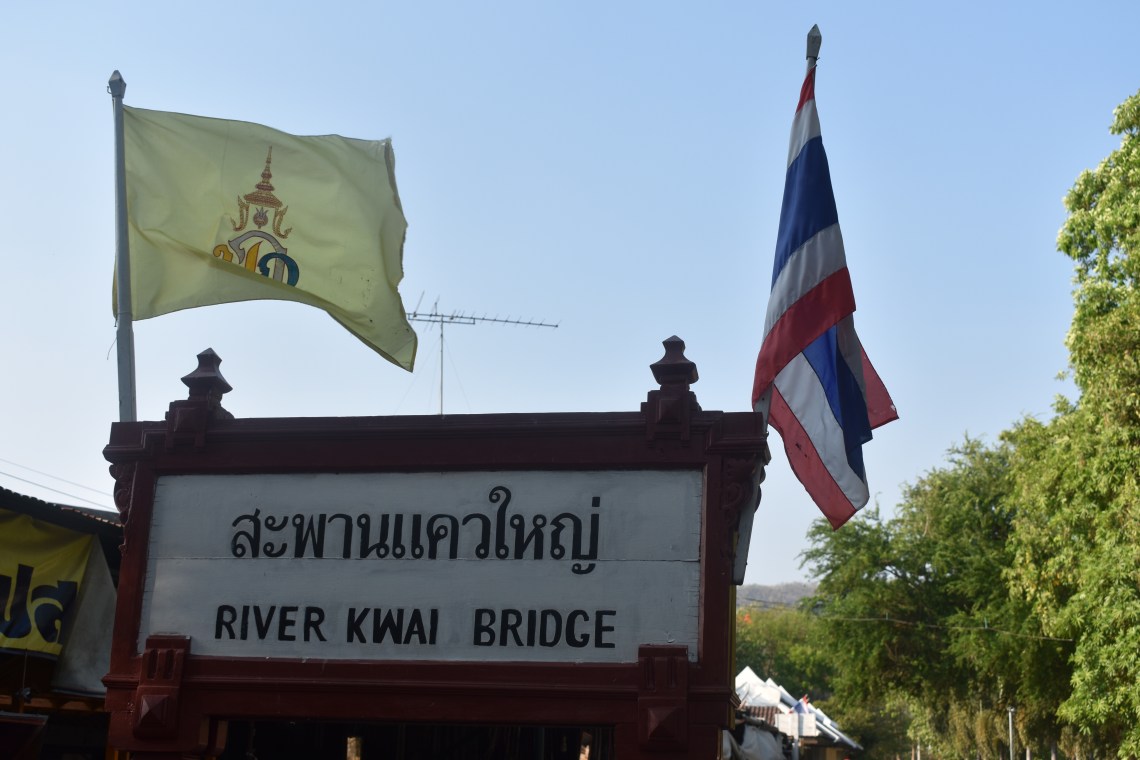
The Bridge itself is now surrounded by restaurants and food hawkers, and shops selling Thai souvenirs. The current bridge was renovated in 1946 by the Thai government. 


 As we walked the bridge I again hummed “Colonel Bogies March”, and imagined only the bridge, surrounded by jungle and the noises of the insects and frogs as well as the sound of the men toiling away.
  Corny I know but hey you weren’t there! Whilst there, a train crossed the river and through the Kwai Station. A true monument to human endurance in awe full circumstances.
That evening we attend Mass at The War Monument Catholic Church.


We reflected on what was quite a day to remember. We were both very moved by what we saw and heard.

 Cleary Overland
Hi Clearys, Trip looks great, so much to see. When we were at the bridge I was struck by the irony, it was Japanese steel brought in to replace the missing sections.
Safe journey
Burge
LikeLike
Hi Burge. Ha I didn’t know that! Yes we have seen so much. Each country so far has been very different but at the same time similar. We have also seen the other sides if each and realise why we live in NZ. I thing everyone can learn something from each other. Cheers Kieran
https://aus-share.inreach.garmin.com/72VYM
This is our code for the GPS tracker
LikeLike